Allexa: An Elegant Script Handwritten Font for Branding
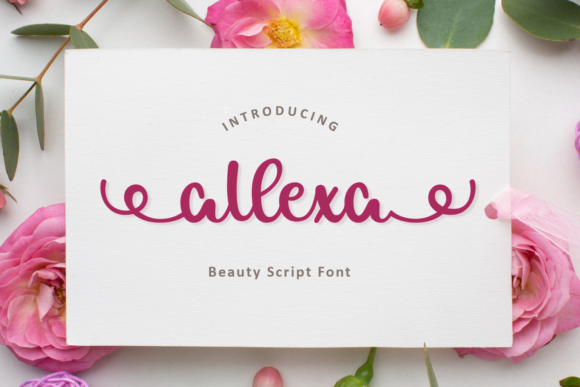
I was staring at a blank brand board for a boutique skincare line last Tuesday, trying to find the right voice for their packaging. The client wanted something that felt personal and artisanal but still carried a sense of luxury. After cycling through a dozen generic options, I opened up Allexa. As soon as I typed the brand name, the mood shifted. This Script Handwritten typeface has a flow that feels organic rather than mechanical, instantly solving the "stiffness" problem I often face with digital fonts. It is rare to find Fonts that balance elegance with such a natural, human touch, making it a go-to choice for projects requiring a personalized style.
Using Allexa for Wedding Invitations and Event Stationery
When working on wedding invitations or thank you cards, the typography often makes or breaks the entire suite. Allexa shines in these contexts because it mimics the pressure and rhythm of a real pen. Unlike many Script Handwritten options that look too perfect or repetitive, this font carries subtle variations that give it life. I recently tested it on a mockup for a wedding save-the-date, pairing it with a clean sans serif for the details. The contrast was striking; Allexa handled the couple's names with grace, while the supporting text remained legible. For designers creating greeting cards or formal wedding stationery, this Fonts selection offers the romantic flair clients expect without sacrificing readability.
Creating Memorable Logos with Allexa Script
Logo design requires a typeface that can stand alone as a symbol of the brand's identity. In my testing, Allexa proved to be an excellent candidate for logo work, particularly for businesses in the lifestyle, beauty, or creative sectors. The strokes are fluid enough to feel approachable yet structured enough to remain professional. When I placed it on a business card draft, the ligatures connected smoothly, avoiding the awkward gaps that sometimes plague Script Handwritten styles. If you are building a brand identity that needs to feel bespoke, integrating Allexa into your logo system can immediately elevate the perceived value of the business. It works especially well as a primary logotype where the name itself is the hero of the design.
Enhancing Packaging Design and Product Labels
Packaging is where tactile feeling meets visual design, and the font choice here dictates how a customer perceives the product inside. I applied Allexa to a series of product labels for a handmade soap concept, and the result was incredibly inviting. The font's elegant curves suggest quality and care, which is essential for artisanal goods. Many Fonts lose their charm when scaled down, but this Script Handwritten option maintains its character even on smaller labels. However, it is important to remember that this is a display font; it is best used for the product name or a short tagline rather than long ingredient lists. Using it as an accent against a simple background allows the typography to breathe and captures attention on the shelf.
Social Media Graphics and Web Headers with Allexa
In the digital space, stopping the scroll is half the battle. I experimented with Allexa in Instagram story templates and website hero sections, finding that it adds a layer of sophistication that standard web fonts often lack. Because it feels so personal, it creates an immediate emotional connection with the viewer. When used in social media graphics for a creative studio, the font helped humanize the brand, making the content feel less corporate and more community-driven. While Script Handwritten styles can sometimes be tricky to read on small mobile screens, Allexa holds up well when used for short headlines or pull quotes. Just ensure you provide enough contrast between the text and the background image to maintain clarity across different devices.
Pairing Allexa with Modern Typography Systems
No font exists in a vacuum, and knowing how to pair Allexa is key to unlocking its full potential. Since it is a decorative and flowing script, it pairs beautifully with geometric sans serifs or neutral serif fonts. In a recent editorial design project, I combined it with a crisp, modern sans serif for the body copy. This combination created a clear visual hierarchy, allowing Allexa to act as the emotional anchor while the secondary font handled the heavy lifting of information delivery. Avoid pairing it with other overly ornate scripts, as this can create visual clutter. The goal is to let this Script Handwritten gem stand out by surrounding it with simplicity. Whether you are designing a lookbook or a website, thoughtful font pairing ensures that Fonts like Allexa enhance rather than overwhelm the layout.
Practical Considerations for Commercial Use
Before finalizing any client work, it is crucial to review the specific licensing terms associated with Allexa. While it is versatile enough for weddings, logos, and packaging, commercial projects often require an extended license, especially if the font will be embedded in a website or used on merchandise for resale. Always check the file formats included; having access to OTF, TTF, and webfont versions ensures you can deploy the typeface across print and digital platforms seamlessly. Additionally, test the multilingual support if your project targets a global audience. Although Allexa excels in English-based designs, verifying character sets prevents headaches later in the production process. By treating this Script Handwritten asset with the same diligence as any other professional tool, you ensure consistent results and legal peace of mind for both you and your clients.